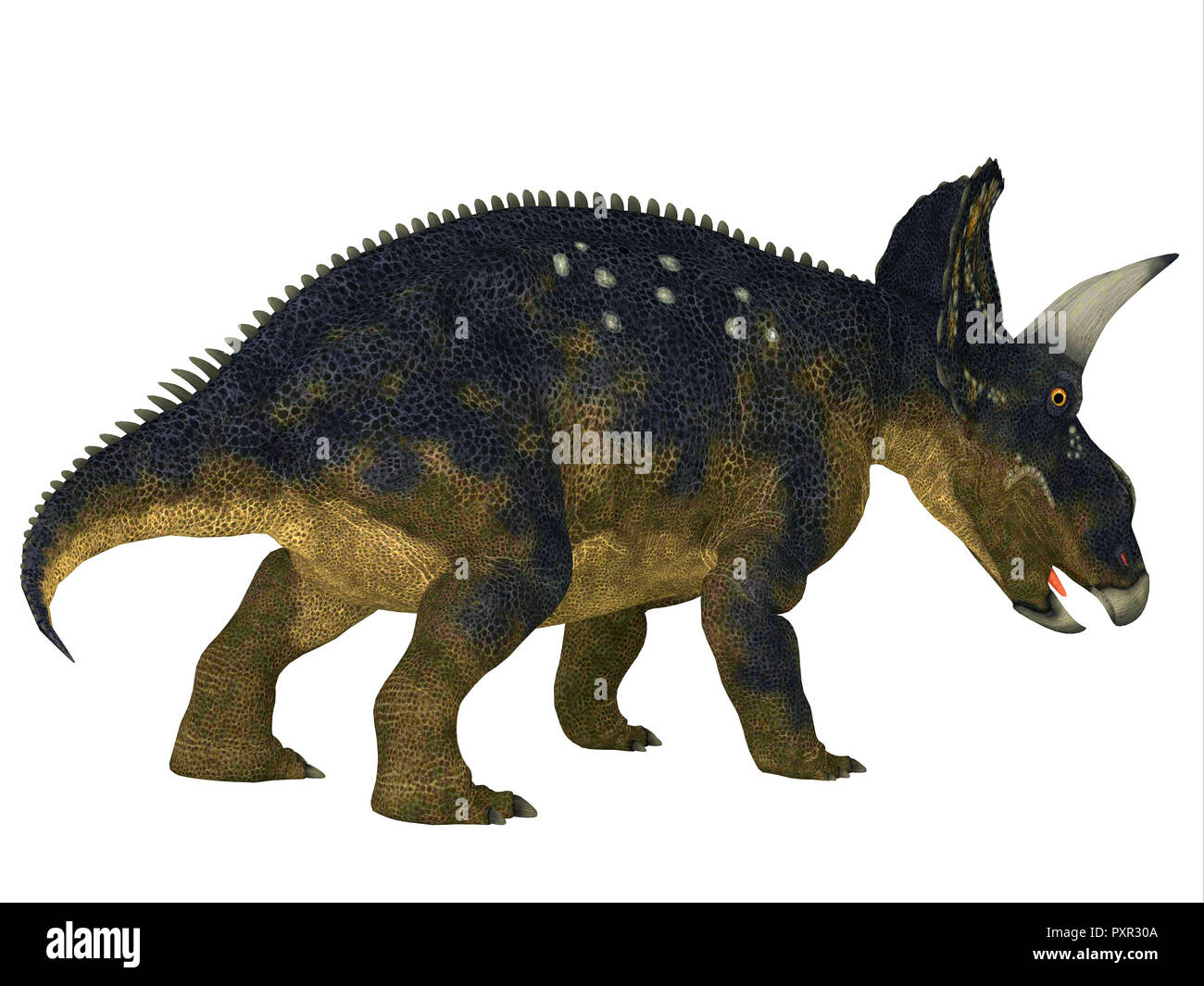
Navajoceratops (meaning "Navajo horned face") is a genus of ceratopsid dinosaur from the late Cretaceous Period of what is now North America. The genus contains a single species, N. sullivani, named after Robert M. Sullivan, leader of the expeditions that recovered the holotype.
The holotype specimen, SMP VP-1500, collected in 2002, consists of a partial skull. It was discovered in the Campanian Hunter Wash Member of the Kirtland Formation, New Mexico. It was informally named in 2016.
Navajoceratops was a member of the Chasmosaurinae. Alongside fellow chasmosaurine Terminocavus, also from the Kirtland Formation and described in the same paper, Navajoceratops was found to represent a stratigraphic and morphological intermediate between Pentaceratops and Anchiceratops. Navajoceratops was also found to be marginally less derived than Terminocavus.
See also
- Timeline of ceratopsian research
References
:max_bytes(150000):strip_icc()/bravoceratopsNT-58b9c1b15f9b58af5ca1dc76.jpg)

:max_bytes(150000):strip_icc()/prenoceratopsCM-58b9c1165f9b58af5ca173cd.jpg)
