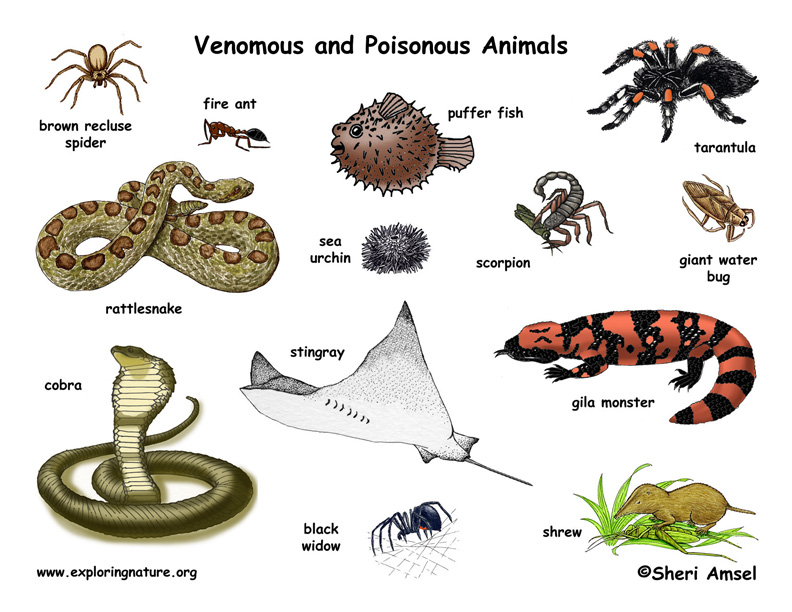
The following is a list of poisonous animals, which are animals that passively deliver toxins (called poison) to their victims upon contact such as through inhalation, absorption through the skin, or after being ingested. They are often distinguished from venomous animals, which actively inject their toxins (called venom) into their victims through a venom apparatus such as fangs or a stinger. The only difference between poisonous animals and venomous animals is how they deliver the toxins. This list deals exclusively with poisonous animals.
Poisonous animals
This list is a partial list of animals that are poisonous to humans and other animals in that their flesh is toxic if consumed, or in some cases if they are touched:
Frogs and toads
Frogs
- Corroboree frog
- Mantella
- Poison dart frog
Toads
Some of these toads are "milked" for their bufotoxins.
- American toad
- Asiatic toad
- Cane toad
- Colorado River toad
- Common toad
- European green toad
- Fowler's toad
Mammals
- Slow loris (usually thought of as venomous, but they also lick their fur, making it toxic)
Birds
- Pitohui
- Blue-capped ifrit
- Shrikethrushes
- Spur-winged goose (diet-dependent)
- Common quail (diet-dependent)
- Carolina parakeet
Snakes
- Rhabdophis keelback snakes
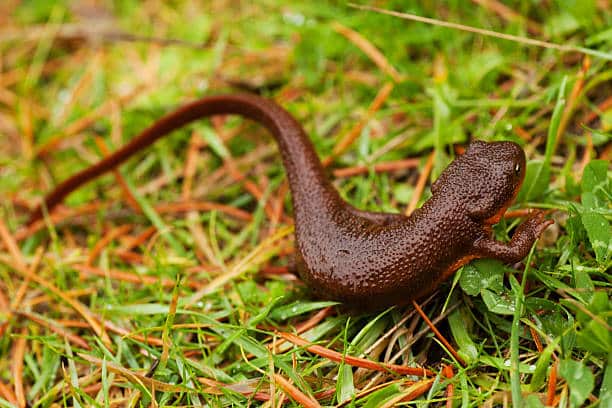
- Garter snake (diet-dependent, when feeding on Pacific newts)
Salamanders
- Pacific newts or Western newts
Fish
- Tetraodontidae (Blowfish, Pufferfish)
- Greenland shark
- Barracuda (age and diet dependent)
Cephalopods
- Blue-ringed octopus
- Pfeffer's flamboyant cuttlefish
Insects
- Blister beetle
- Diamphidia
- Cinnabar moth
- Certain tiger moths (Erebidae)
- Birdwings
- Milkweed butterflies (include Monarch butterfly)
- Battus (butterfly)
Crustaceans
- Gorilla crabs (Xanthidae)
Cnidarians
- Some members of the genus Palythoa produce the highly toxic palytoxin
- Rhodactis species
Echinoderms
- It is common for sea cucumbers like Pearsonothuria graeffei to protect itself with toxins
- Actinopyga agassizii a toxic sea cucumber
- Some starfish, like Plectaster decanus, are poisonous
Annelids
- The polychaete worm Hediste diversicolor
- Halla parthenopeia
Nemerteans
- Antarctonemertes valida is one of several nemerteans which make use of defensive toxic secretions
Flatworms
- Bipalium kewense, the hammerhead flatworm, is coated in toxic mucus
Sponges
- Negombata magnifica, the toxic finger-sponge, is one of many toxic species of sponges
Placozoans
- Trichoplax use large specialized cells to release antipredatory toxins
See also
- Poisonous amphibians
- Toxic birds
- List of venomous animals
- List of poisonous plants
- List of poisonous fungi
References